24 Frames a Day

24 Frames a Day

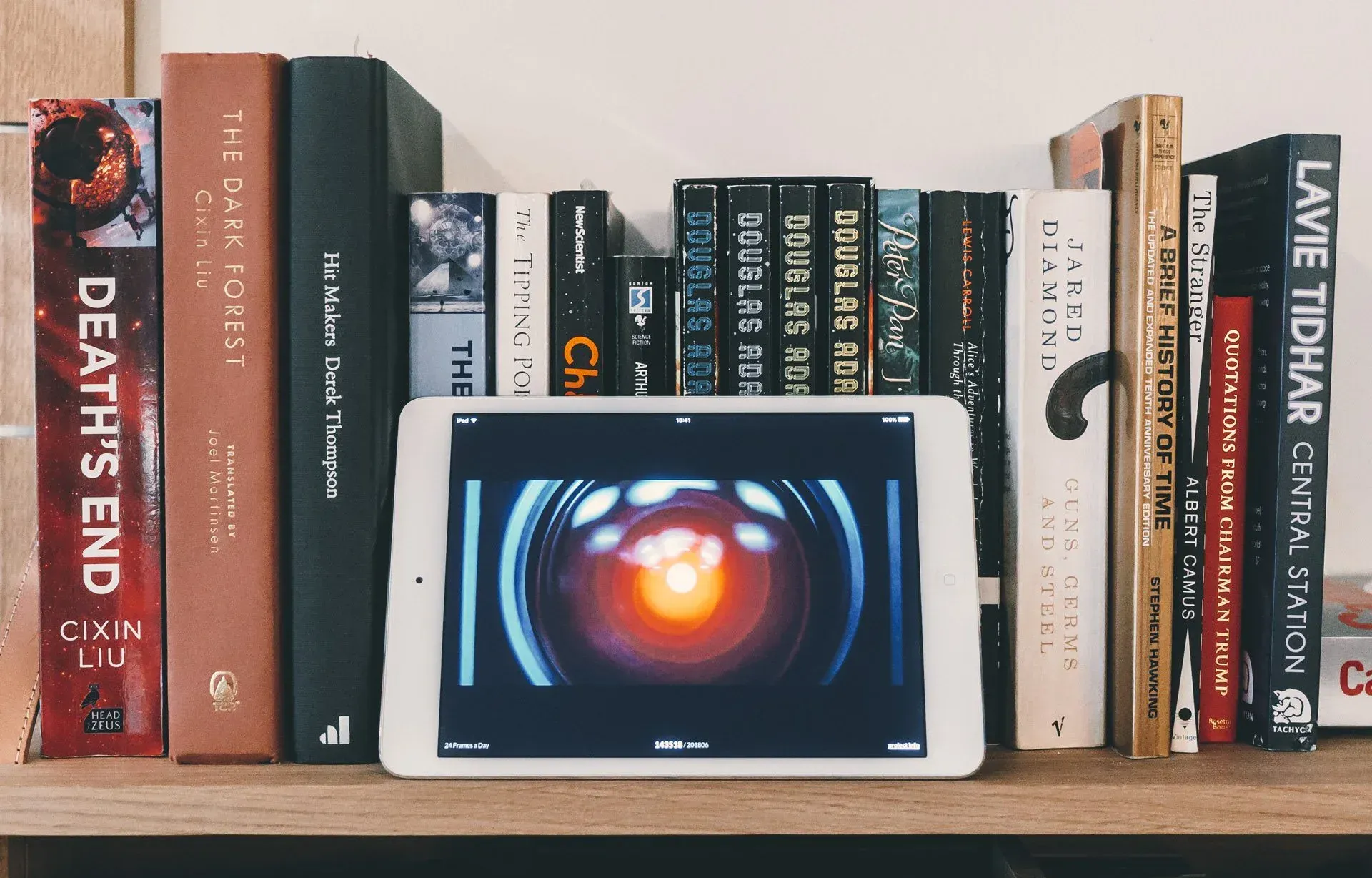
People say "every frame is a painting" about Kubrick's films, and I think it's especially true for 2001: A Space Odyssey. I've always enjoyed the visuals more than sitting through an entire watch. What if we slowed it way down? Instead of the cinematic 24 frames a second, the film plays one frame at a time. Put it on a screen somewhere in your house, like an iPad in a bookcase, and enjoy the paintings for years.

The original project has already completed. The first run played at 24 frames a day: one frame per hour, for over 23 years. It started on April 26, 2001, the moment in the film when the monolith on the Moon sends its signal towards Jupiter, it ended in May 2024.

The project was too good to end, so I decided to continue it in reverse. It's now playing backwards, six times faster, to reach the start (or end), on April 2 2028: sixty years after the film's premiere. From that moment it plays forward once again, even slower than before, finishing when Halley's Comet comes back in 2061.
View

Continuum: time the way it looks in my head

Continuum: time the way it looks in my head

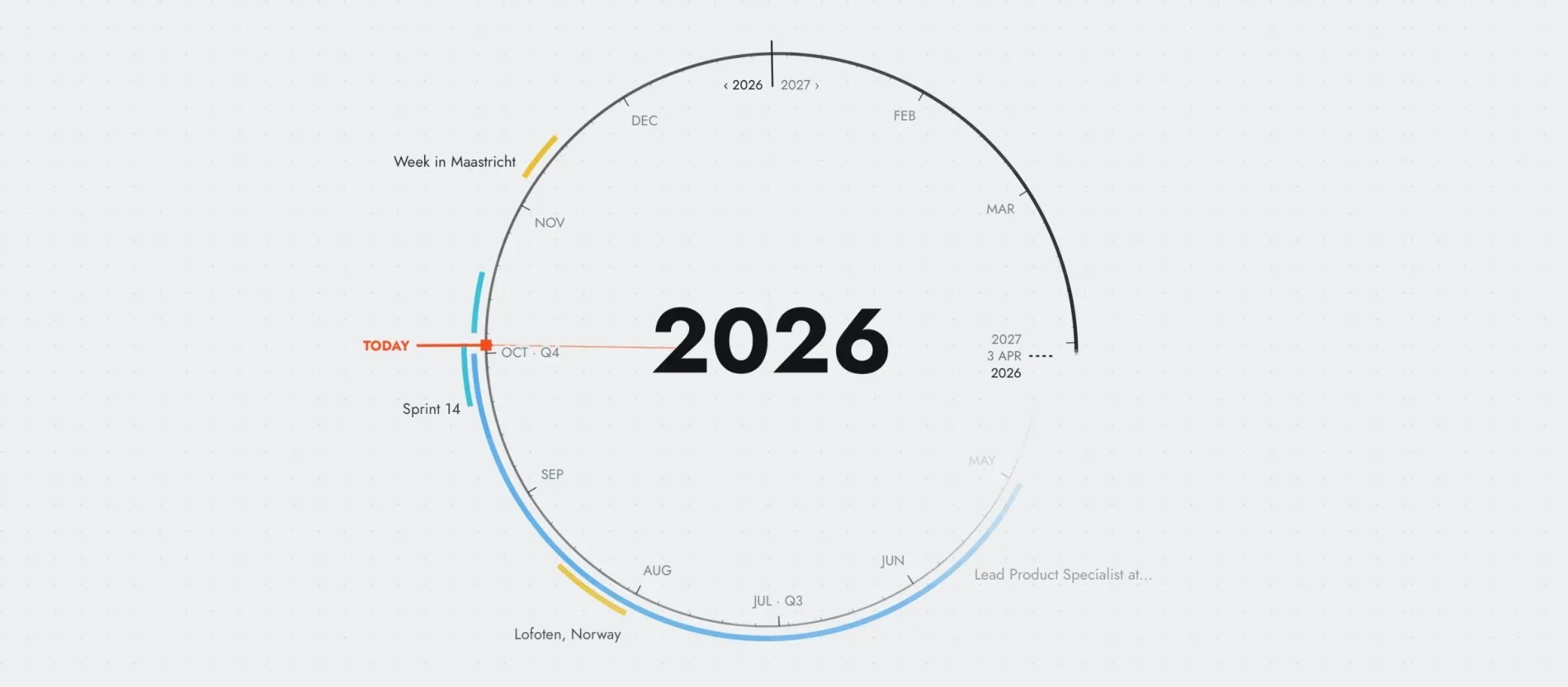
I've always had trouble with calendars and dates. I've missed appointments and booked flights wrong because of it. My mental model of time just doesn't match what regular calendars look like, especially in modern apps. In my head, time is continuous, everything fits on a single timeline.

I decided to see if I could prototype what time looks like in my head. Continuum draws time as a single zoomable artifact. You can scroll to move through time and zoom to see different levels. It doesn't matter if you want to see a lifetime, or just check the time segment breakdown of your workshop this week.

Try it

DOPE Sheet - Do, Outsource, Plan, Eliminate

DOPE Sheet - Do, Outsource, Plan, Eliminate

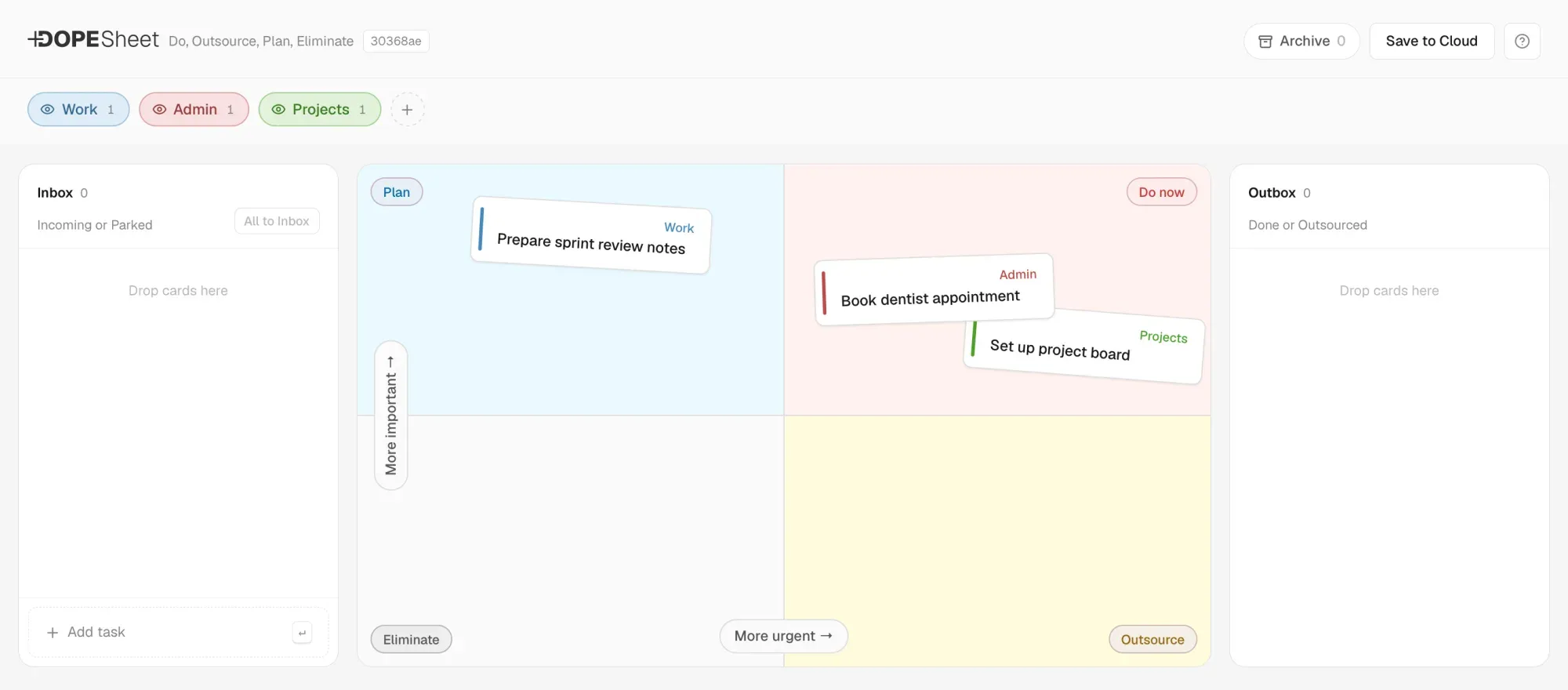
Popular task managers don't help me prioritise. They're good at capturing tasks, but I always end up with multiple long lists that are hard to cross prioritize. DOPE Sheet takes a different approach: make a long list of your tasks and categorize everything on a canvas: what you need to do yourself right now, what you should hand off, what needs a slot in your calendar, and what you should just stop doing. One view, easy prioritization, and no anxiety about what you're forgetting.

The name comes from the animator's dope sheet — also called an exposure sheet: a single document that maps every frame of a scene in order. Everything that needs to happen, in one place. It includes cloud sync and shared tags, so the sheet can follow you across devices.

Try it

Worknife - Like a swiss army knife, but for work

Worknife - Like a swiss army knife, but for work

Worknife is a collection of small tools I built during my time at argodesign to solve recurring friction in design work. Each one came from a specific annoyance: signing into different laptops with auto-generated passwords, sharing links across a room during workshops, keeping time across timezones in remote sessions, anonymizing research data without losing what made it useful, and warming people up before a brainstorm.

Try it

QRio: Bridge the air gap

QRio: Bridge the air gap

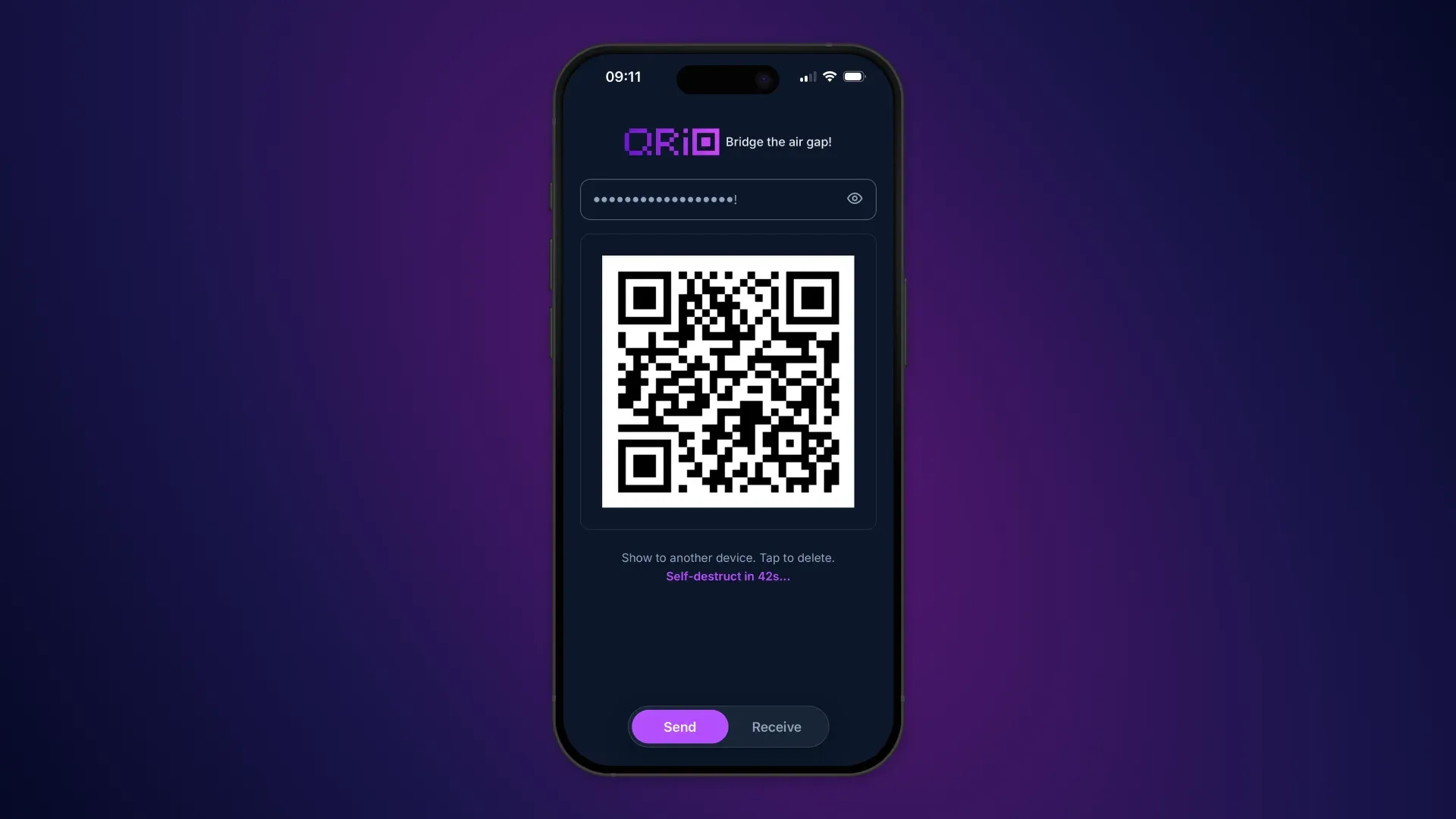
I kept having to type long passwords by hand into work laptops that didn't have my password manager installed. The typos alone made it annoying enough to fix. QRio generates a QR code containing whatever sensitive information you need to move, with a timeout that destroys it after a set period. All processing stays on your device, so nothing passes through infrastructure you don't control.

Try it

Memento

Memento

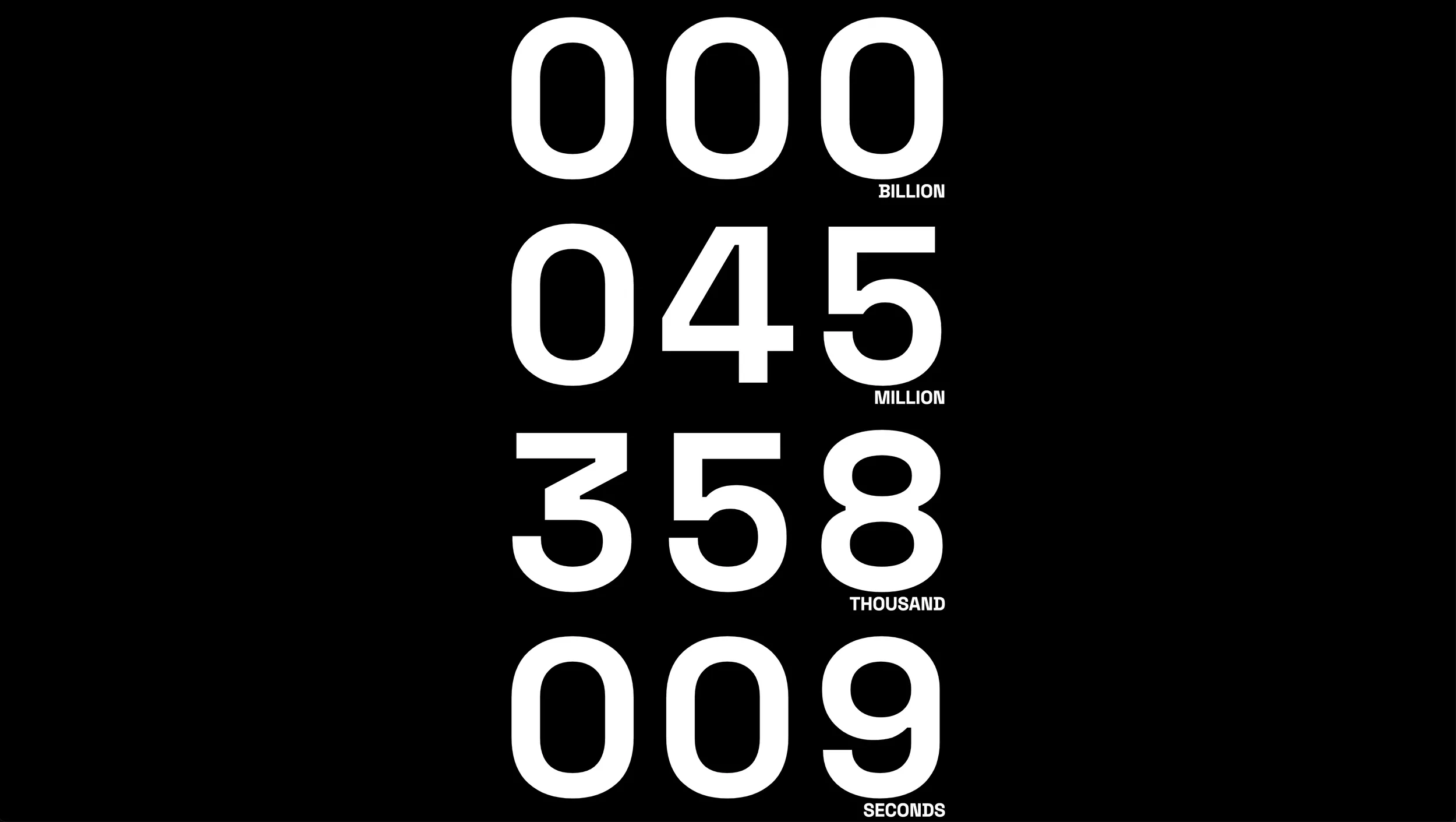
Memento is a clock that can count up from or down to a specific time you choose. Set it to your birthday and it tells you how many seconds you've been on earth. Set it to the date of your dream sabbatical and you have something to look forward to. The 12-digit display can hold nearly 32,000 years, surpassing all of written history. Everything is better when counted in small bits.

Try it

Hidden music desk

Hidden music desk 1
Hidden music desk 2
Hidden music desk 3

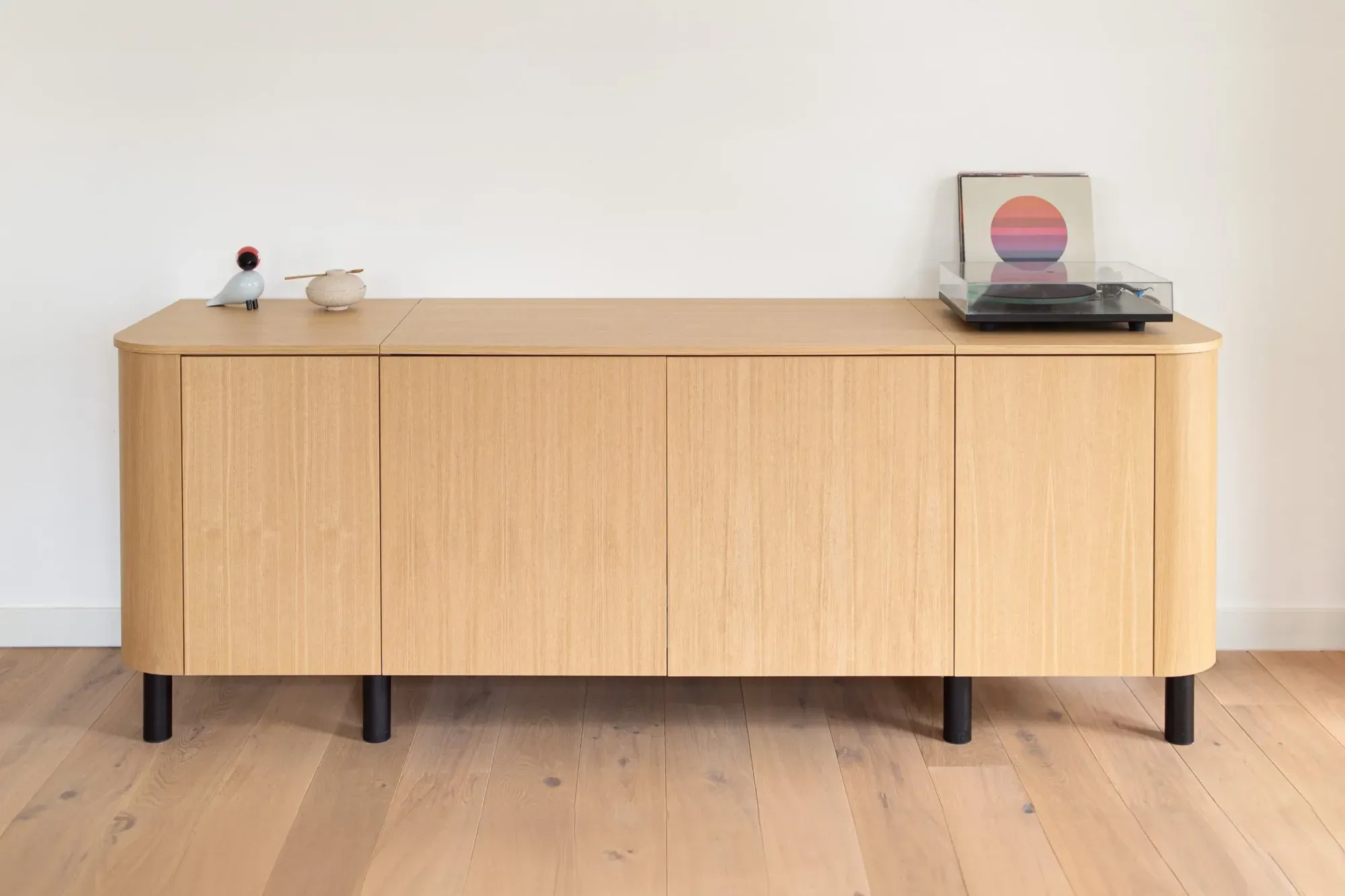
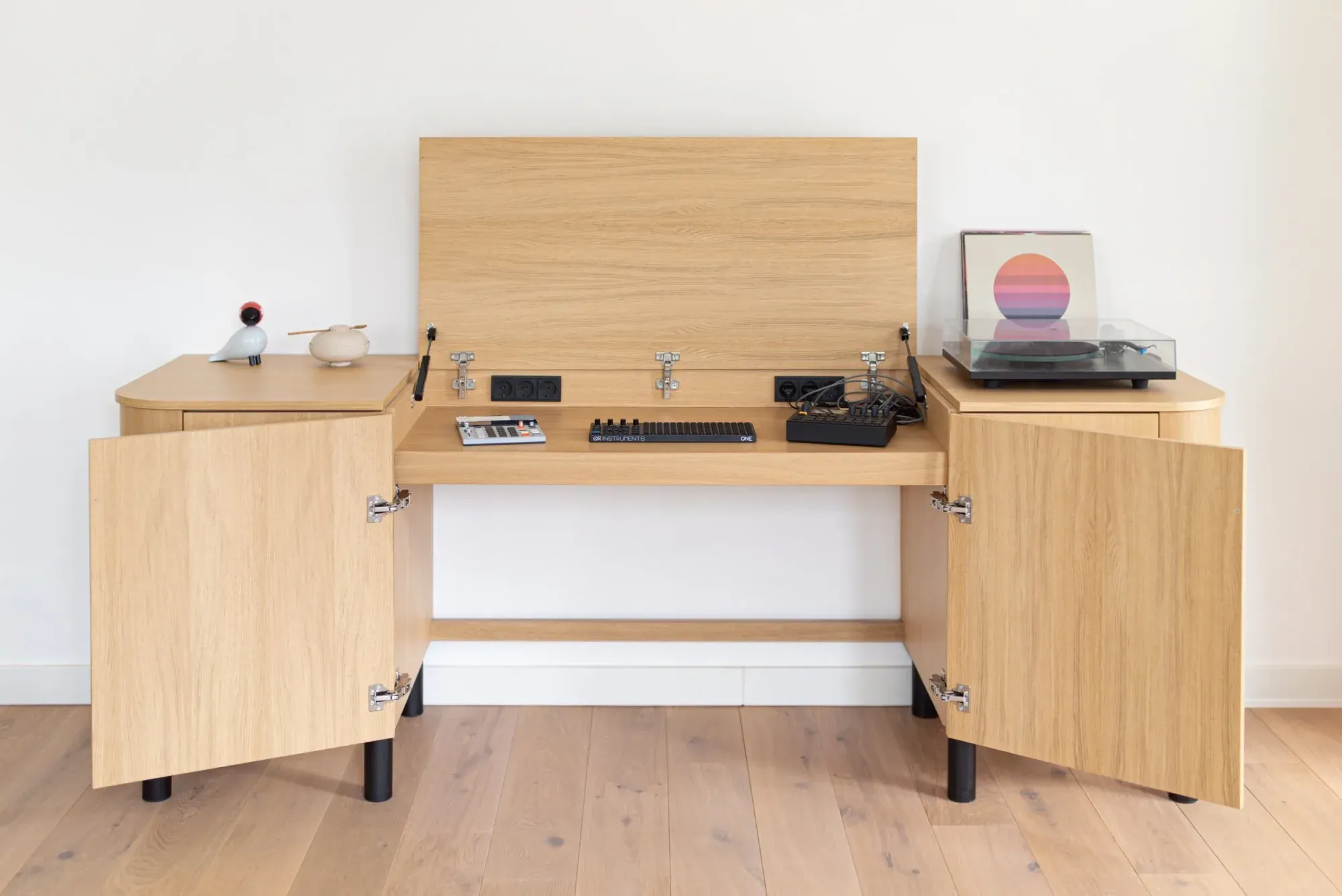
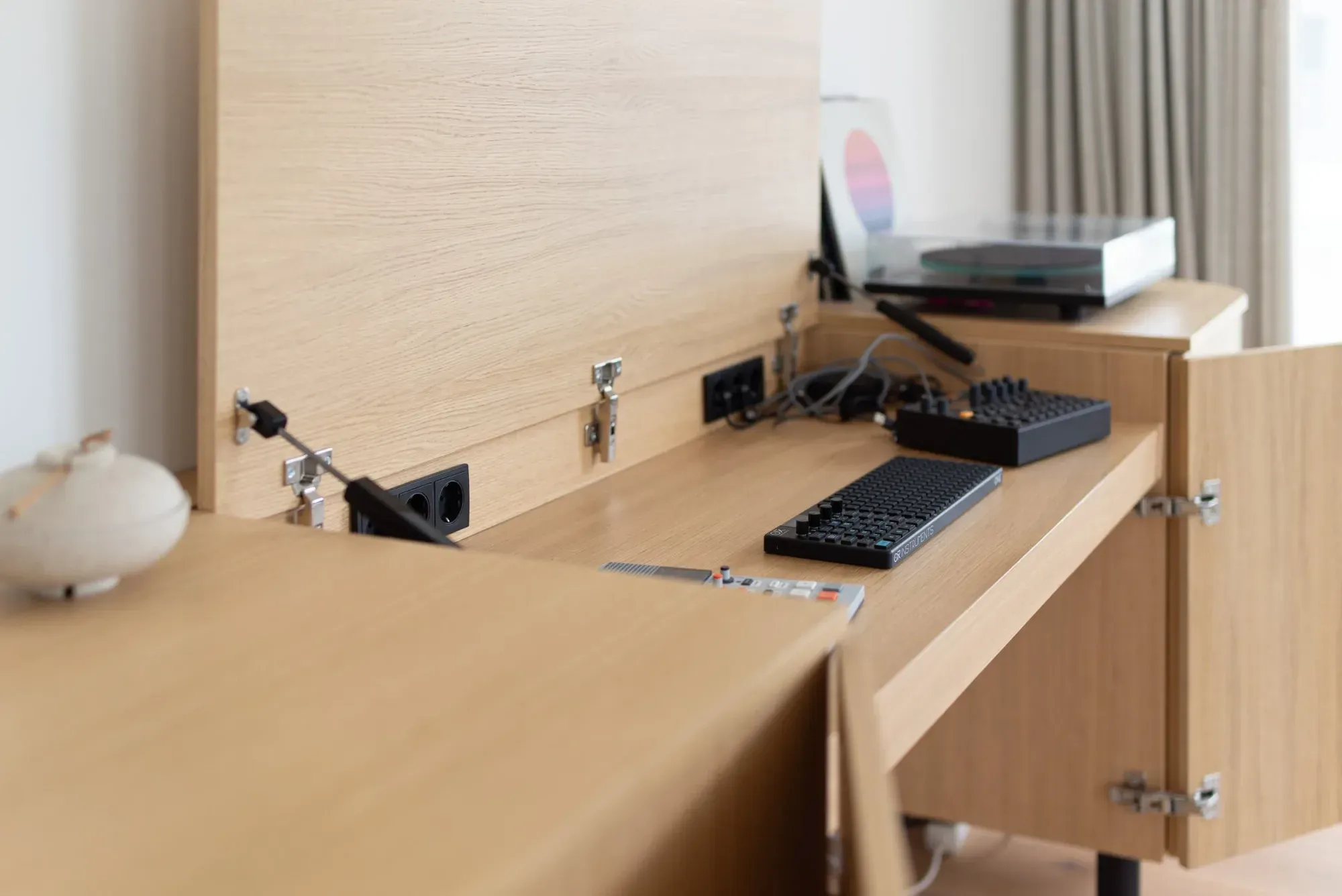
I needed a place to keep my synthesizers that didn't look like a studio in the middle of my living room. The desk was designed to look like a dresser when closed: same proportions, gear out of sight. When I sit down to play, the dresser can open up, giving me access to my full set-up. Built-in power sockets, storage for a stool underneath.

Music of the Helixes

DNA is a long sequence of letters that your body interprets into amino acids. You can see it visualised and not understand it. This project asked what would happen if you turned it into sound instead. A custom processing application translates the RNA sequence of the human X genome into notes, which are sent via MIDI to a synthesizer in Ableton.

Entropy

Entropy 1
Entropy 2

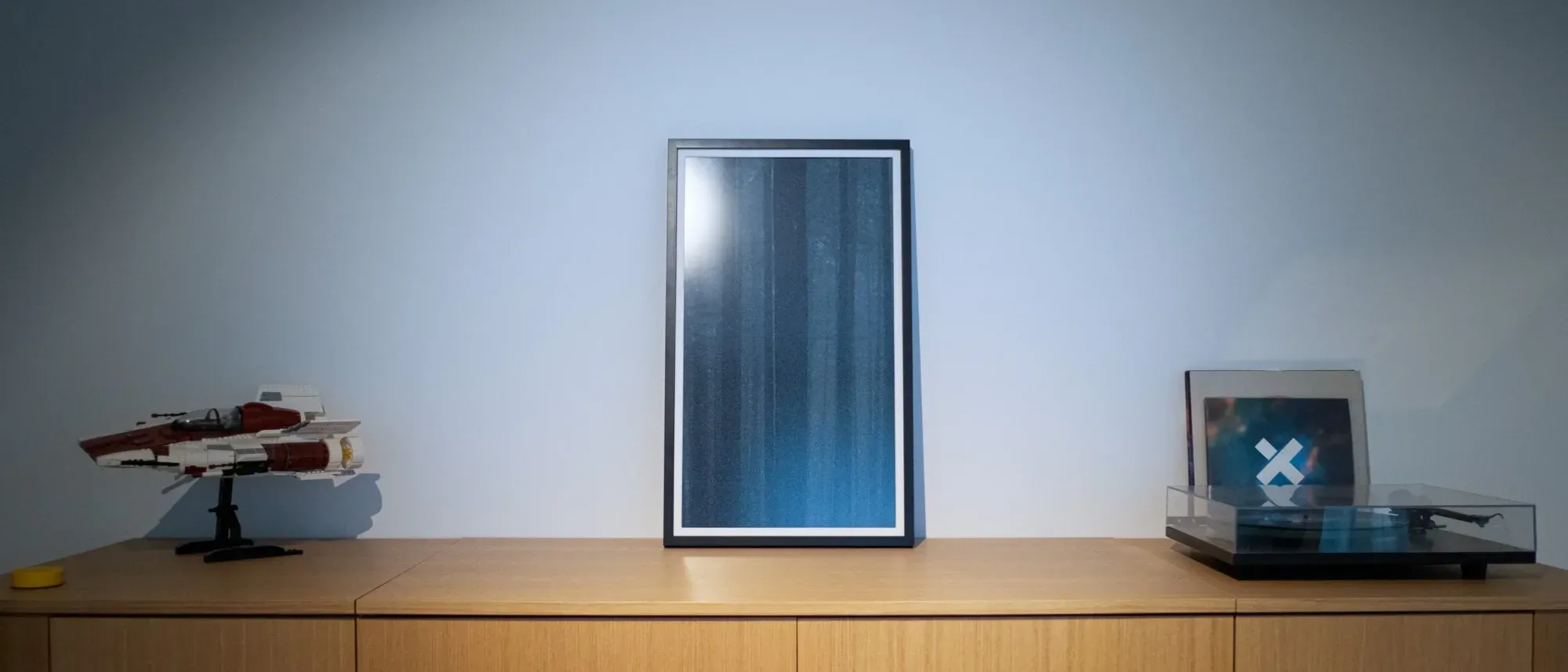
All things are submitted to entropy, even digital data. We don't actually notice this, because all digital systems are continuously fighting decay. Moving things on a local harddrive, or copying thing to several media in datacenters. What would it feel like if we have a digital image that does decay?

Entropy is a 32-inch e-paper artwork in a wooden frame. The screen displays an image and flickers once an hour, losing pixels each time. The process is irreversible: the image cannot be recovered. The screen quality makes it feel like a print, which is part of what makes the flickering so surprising.

Entropy is available for exhibitions.

Enquire

Horizons: our connection to time

Horizons: our connection to time

Clocks tell us what time it is in numbers. They stopped giving us a feeling of where we are in the day a long time ago. Horizons is a set of ambient clocks showing the actual position of the sun in the sky at a location you choose, letting you stay connected to a place even when you're far away from it.

View Add to home screen on iOS for fullscreen.

Arcadia Planitia: What time is it on Mars?

Arcadia Planitia: What time is it on Mars?

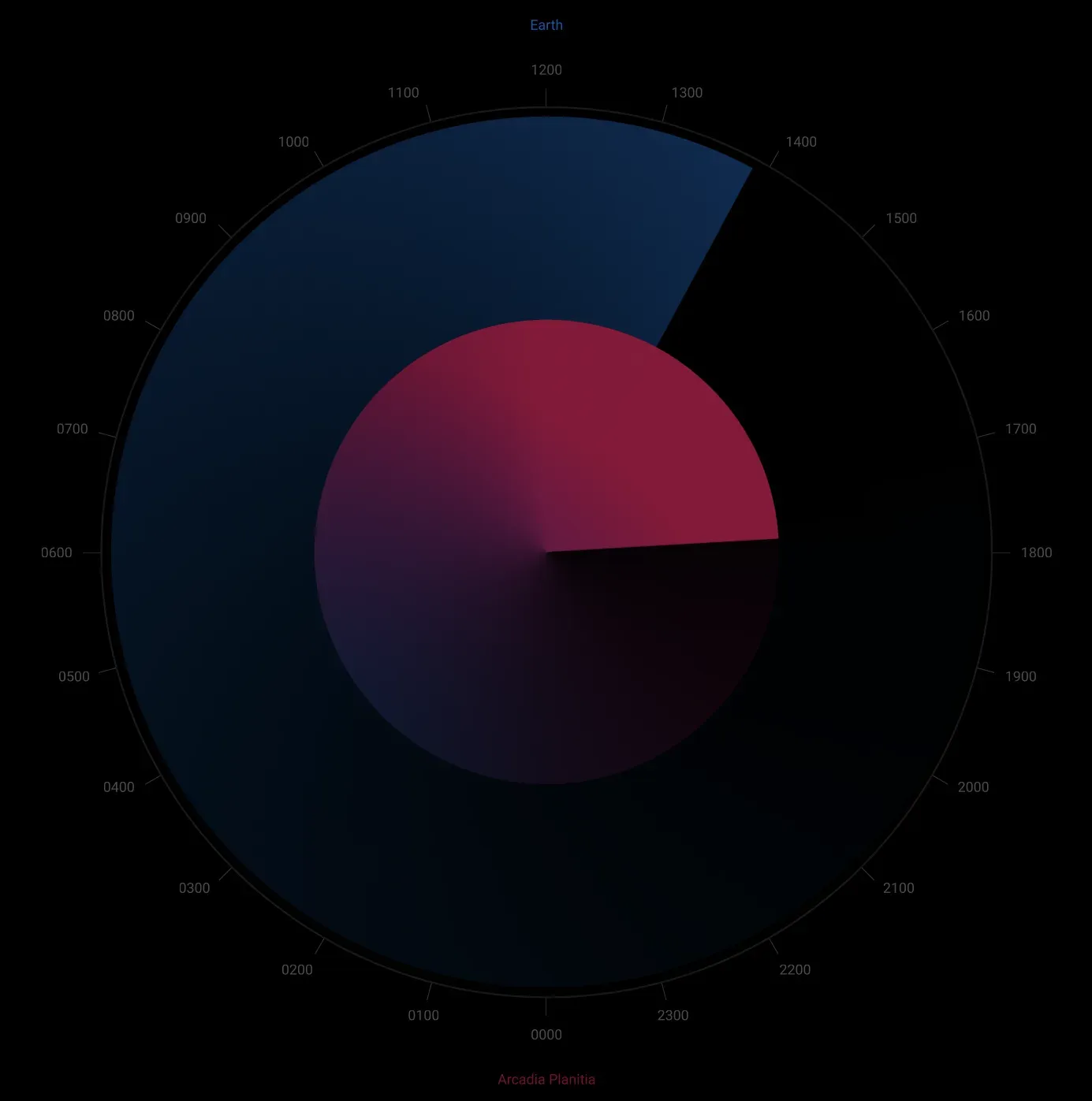
A day on Mars lasts 24 hours, 37 minutes, and 22 seconds. That 37-minute difference means that Mars has no fixed time zone relative to Earth: time shifts a little every day. Imagine a future in which we have family on Mars, planning phonecalls will be a hassle. The Arcadia Planitia clock aims to make the difference visual. The clock shows the time at Arcadia Planitia — the candidate for the first Mars base — overlaid with the time for your location on Earth.

View Add to home screen on iOS for fullscreen.

Digital decay: the image that eats itself

Digital decay: the image that eats itself

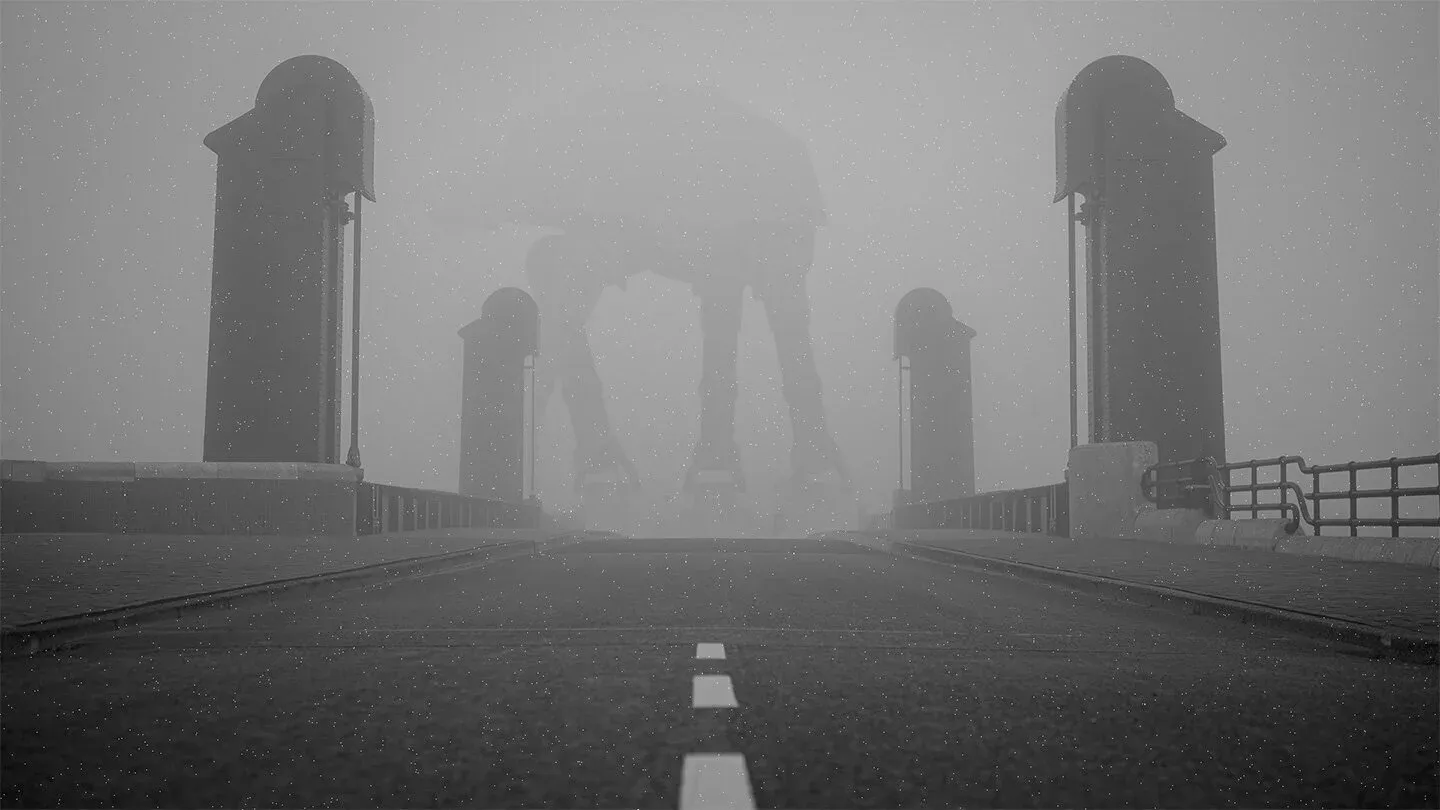
Digital pictures don't age. They're either intact or gone, with nothing in between. This experiment added the middle state: an image that lost one pixel per minute for four years. The source files were deleted. The fog in the photograph no longer exists.

The image completed its decay in March 2025. Nothing of the original is left.

Why we prototype: Building Dawn

Why we prototype: Building Dawn

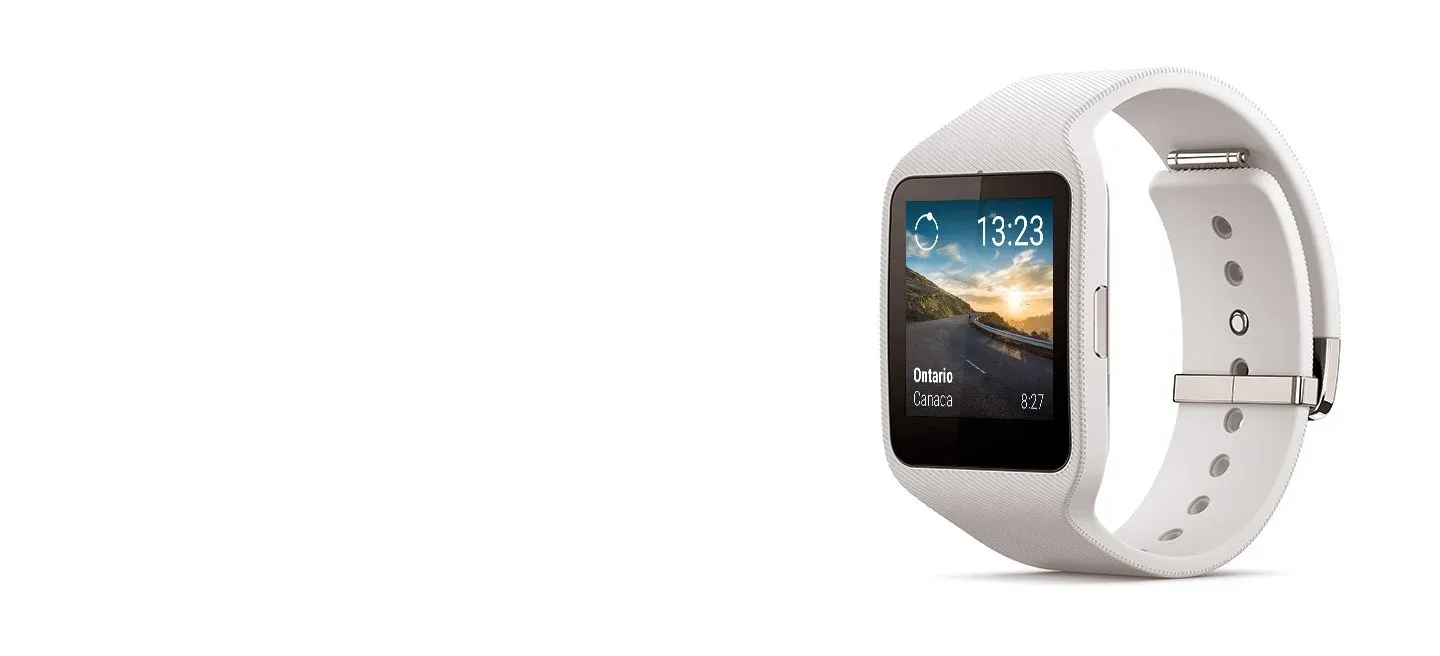
In winter, the sun rises at roughly the same time in Amsterdam as it does in Chile. In summer, Amsterdam and Madagascar share a sunrise. I found this interesting enough to not let go. Dawn was a watch face that shows where in the world the sun is rising right now: a serendipity engine disguised as a clock.

This piece documents the process of building it: from the initial observation, through the mechanics of finding a sunrise coordinate, to the moment the prototype found the RMS Titanic surfacing at the exact location where it sank. That moment is what prototyping is for.

Read

How to talk to computers: Meet Wink

With voice interfaces, it's not always clear who's being addressed. When you call out to a room with multiple people in it, your gaze does the work of selecting who you're talking to. Wink was an experiment in giving a computer that same reciprocal quality: a small eye-shaped robot that looks back at you when it sees you, completing the communication loop.

With Alan Nguyen

Can machines be friendly? Friendly Vending

Vending machines are a clear case of people adapting to a machine rather than the other way around. This project asked whether that could be reversed. The machine used motion: soda cans that turned to face you as you approached, products that moved when pointed at, randomness built in so no two interactions felt identical.

Four principles drove the design: reciprocal perception, pre-interaction, physical motion, and randomness. The finding was that friendliness is mostly a question of timing and attention, not personality.